For The Record: Sunday, Aug. 30, 2015 - News
Estate Planning is all about peace of mind. What estate planning is all about is discovering the right devices to implement your fundamental needs. We do this using the most up to date tools so that we can prepare a customized strategy at the most affordable possible expense.
Marriage licenses
Edwin Leonel Rivera Rivera, 610 Masser St., Sunbury, to Glenda Mabel Alfaro Flores, 655 Wheatley Ave., Northumberland. Issued Aug. 27, 2015.
Dylan-James Patrick Purcell, 12 S. Vine St., Shamokin, to Kaitlyn Nicole Crouse, 614 N. Shamokin St., Apt. 502, Shamokin. Issued Aug. 27, 2015.
Chad Albert Leitzel to Connie A. Hoffman, both of 8189 State Route 147, Sunbury. Issued Aug. 27, 2015.
Michael James Deane to Amber Louise Adams, both of 931 Scott St., Kulpmont. Issued Aug. 27, 2015.
Matthew Aaron Persing to Tina Louise Alma, both of 502 Lahrs Road, Northumberland. Issued Aug. 27, 2015.
Joshua S. Stahl to Christi Renee Finamore, both of 816 Front St., Northumberland. Issued Aug. 27, 2015.
Jeramie Franklin Dimm to Christianne Case, both of 39 Watson Road, Turbotville. Issued Aug. 28, 2015.
Michael Moroz, 537 Chestnut St., Kulpmont, to Holly Ann Hinman, 47 N. Walnut St., Mount Carmel. Issued Aug. 29, 2015.
Robert Elwood Mull IV to Whitney Jean Schick, both of 459 N. Ninth St., Sunbury. Issued Aug. 29, 2015.
Richard Gerald Bitting III to Kimberly Mae Nelson, both of 2072 Irish Valley Road, Paxinos. Issued Aug. 29, 2015.
Tyler Steven Graves to Madison Nicole Murphy, both of 224 Lunar Lane, Milton. Issued Aug. 29, 2015.
Ren Allen Sinko to Eryn Kathleen Young, both of 320 Walnut St., Sunbury. To be issued Aug. 31, 2015.
Johnathon Francis Radziewicz to Jennifer Marie Lauro, both of 2038 Upper Road, Shamokin. To be issued Aug. 31, 2015.
Corey James Yeager to Marisa Lynn Betz, both of 345 S. Oak St., Mount Carmel. To be issued Aug. 31, 2015.
Alberto Santana to Carmela Amico, both of 533 Race St., Apt. 1, Sunbury. Issued Aug. 27, 2015.
Dominic Justin Adams to Kelsey Raven Comfort, both of 509 1/2 Chestnut St., Sunbury. Issued Aug. 27, 2015.
Property transfers
PFI LLC to Northumberland County, property in Ralpho Township, $1.
Joseph C. Purcell Jr. to Aleah M. Thompson, property in Shamokin, $6,000.
Gerald W. Mensch (executor), George W. Mensch (estate), to Craig E. Reader Jr., property in Zerbe Township, $1.
Norman E. Ford (by agent), Audress H. Hinkle (agent), Edith L. Barnhart (agent), to Noel D. Woodruff, property in Ralpho Township, $66,000.
Elizabeth M. Burt to 3PK LLC, property in Shamokin, $40,000.
Quisqueya Reynoso to Roland Alexander, property in Mount Carmel, $1,483.
B. Holly Prichard (estate), Beverly A. Smith (administratrix) to Beverly A. Smith, property in Rockefeller Township, $1.
Jarrett J. Sweeney, Jarett J. Sweeney, Dana M. Rowe and Dana M. Sweeney to Dana M. Sweeney, property in East Cameron Township, $1.
Dale Brosius and Janet Brosius to Kenneth L. Newman (trustee), Kenneth L. Newman Irrevocable Realty and Income Trust, property in Jordan Township, $67,500.
Ruth Landthaler to Michael P. Mahoney and Jane Wineberg, property in Ralpho Township, $197,500.
Joseph G. Kappen (trustee) and Joseph G. Kappen (Revocable Living Trust) to Joseph G. Kappen and Margaret J. Kappen, property in Ralpho Township, $1.
Margaret J. Wagner to Joseph G. Kappen, Margaret J. Kappen, property in Shamokin, $1.
Carol A. Broscious and Joseph G. Broscious to Susan M. Long and Roger L. Long, property in Coal Township, $6,000.
Amy L. Roseman, Gerald Zsido, Mary Ann Zsido, James Zsido and Loretta A. Zsido to Rocco A. Delvecchio, property in Mount Carmel, $47,000.
Charles Thomas Ravis and Lorraine G. Ravis to Michael A. Willow and Angela N. Willow, property in Shamokin Township, $1.
George Atiyeh House Flex LLC to David W. Lloyd, property in Shamokin, $19,500.
House Flex LLC to David W. Lloyd, property in Shamokin, $5,000.

Sandra Shaffer Mattern to Gene L. Dreibelbis and Suzanne G. Perry, property in Lower Mahanoy Township, $1.
Benjamin J. Spickler and Rebecca A. Spickler to Rebecca A. Spickler, property in Washington and Upper Mahanoy townships, $1.
Jennifer L. James, Jason C. James, Koryne Dilliplane, Joseph F. James (estate) and James Dilliplane to Jennifer L. James, property in Shamokin, $3,000.
John A. Leschinskie to Joseph J. Leschinskie Jr., property in Shamokin, $17,524.
Maria Adam to Mark J. Williams and Sandra A. Williams, property in Coal Township, $23,500.
George W. Heath (trustee), Jane I. Watson (trustee), Clair R. Heath (trustee) and Heath Irrevocable Residential and Income Trust to Millard H. Watson II and Jane I. Watson, property in Rush Township, $1.
Robert L. Faust Sr., Joan M. Faust, Robert L. Faust Jr. and Brandy M. Faust to Robert L. Faust Sr., Joan M. Faust and Robert L. Faust Jr., property in Lower Mahanoy Township, $1.
Robert L. Wolfe, Norma J. Wolfe, Robert L. Wolfe Jr., Lynn L. Mengle and Douglas E. Mengle to Todd R. Myers, property in Little Mahanoy Township, $1.
Stacey M. Forney, Kathleen Ann Hull (estate) to Stacey M. Forney and Theresa A. Bond, property in Zerbe Township, $1.
Charles A. Troup Jr. and Angela M. Troup to Stephen Sidella and Amber Sidella, property in Shamokin, $1.
http://newsitem.com/news/for-the-record-sunday-aug-30-2015-1.1934454
Estate Planning is the procedure of establishing who obtains your properties, when they get those ownerships, as well as who looks after you when you are old. Plus, your estate plan establishes who could care for your kids.
The fundamental building block of any sort of estate plan is a Last Will and Testament. This document is known everywhere as a record that is prepared by a lawyer as well as signed by two or more witnesses as well as then notarized.
Some individuals use a Revocable Trust instead of a Will. The Revocable Trust could do all the very same things as a Will, however it does not have to go through the probate process to be efficient. In addition, a Revocable Living Trust is sometimes used for tax preparation and charitable preparing.
Today's top types of Trusts - Washington DC Personal Finance
Estate Planning is really about comfort. What estate planning is all about is discovering the right devices to implement your basic requirements. What that indicates is that we utilize the most innovative legal documents to properly implement your desires. We customize each and every strategy so that you get exactly what you desire. We do this using the most current tools so that we can prepare a personalized strategy at the most affordable possible cost. Kindly call us today with any concerns.
Everyone has a need to plan for the future. Some tools used by todays Estate Planning Attorneys can accomplish great things. I recently had a discussion with Attorney Steven Singhaus from Olney, MD in which he discussed some of the most common and useful types of trusts. In each case the terms describe characteristics of a trust. A single trust may incorporate more than one of these characteristics but not all. If you want to know how they apply to you then it is time for you to call a lawyer.
Dynasty Trusts, (Legacy Trusts, Delaware Trusts) may allow the transfer of wealth from generation to generation for multiple generations without incurring transfer taxes such as estate and gift tax. In some states it is possible for these trusts to survive for more than 200 years.
Crummey Trusts benefit a minor while qualifying them for exclusion from the unified gift and estate tax.
Charitable Trusts (Charitable Remainder Trusts, Charitable Remainder Annuity Trust, Charitable Remainder Unitrust etc.) may allow the grantor a deduction for transfers to charitable organizations for public, charitable, and religious uses while still receiving income from the trust.
Testamentary Trusts may sound redundant but they are created by a will and effective at testators death.
Qualified Personal Residence Trusts (QPRT) may allow for the transfer of real property at a discounted value while still allowing the grantor to reside at the property for a period of years.
Special Needs Trusts are created to provide funds to care for a disabled beneficiary. This may allow for the beneficiary to still qualify for needs based assistance they may not otherwise qualify for due to funds received in tort settlement, inheritance.
Revocable or Irrevocable Trust - revocable trusts can be changed, altered or rescinded. Irrevocable trusts can not. Revocable Trust may be are used to avoid probate, make documents private http://free.yudu.com/item/details/3356064/Think-before-squeezing-that-tube-of-toothpaste---Denver-estate-planning or to plan for ones future if they are concerned about their ability to control assets in the future (incapacity etc.) Irrevocable Trusts will generally avoid probate, and may also avoid estate taxes.
Irrevocable Life Insurance Trusts can allow for the proceeds of a life insurance policy to be excluded from their estate thereby avoiding federal estate taxes on the proceeds.
Credit Shelter (Bypass) Trust - can be used to leave/transfer property to another person, in a trust, so when that person dies those assets are not subject to estate taxes. Certain rules must be followed to prevent the property from being taxed twice. The person who initially leaves the property for the benefit of another will be taxed on their estate. These trusts can also help take advantage of the unlimited marital deduction that allows spouses to make unlimited tax-free transfers between themselves during life or at death.
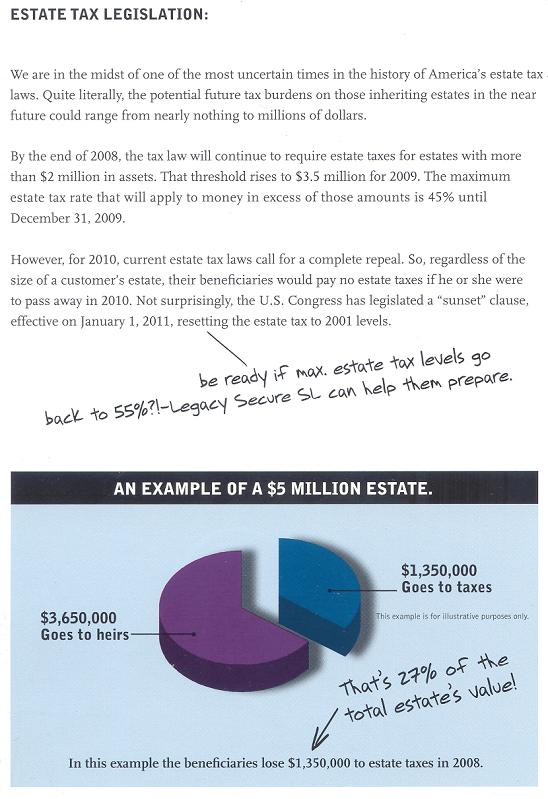
Qualified Terminable Interest Property (QTIP) and Maryland state-only QTIP This estate election allows the surviving spouse to defer estate tax until their death helping them to take advantage of the marital deduction. The low Maryland exemption level of $1,000,000 makes this useful for many couples.
Living Trusts or Inter Vivos Trusts are created during the life of a person. That person will transfer all of their assets into the trust and become the trustee. Some benefits include privacy and the avoidance of probate. They are also useful for disability planning, giving authority for others to manage or control your assets in the event you cannot, or in the event that you believe your Will may be challenged, Trusts are more difficult to challenge.
Spendthrift Trusts contain express restrictions upon the voluntary or involuntary alienation of the beneficiarys share. These are often used to protect the beneficiary against themselves and possible creditors. Young and/or irresponsible beneficiaries that may not be as responsible as you like with the property they inherit or who may have creditors who would try to attach the property left to them.
Discretionary Trust give trustees the ability to decide how much income should be used for the benefit of the beneficiaries. The beneficiary may only receive what is set forth according to the trust.
Remember trusts are not for everyone. Proper estate planning usually involves both financial and legal advisors to identify your goals and the best steps to achieve them. If you have questions about anything in this article or other topics of personal finance and investing please comment below or write me at sld@defrehnconsulting.com.
http://www.examiner.com/article/today-s-top-types-of-trusts
Estate Planning is the procedure of establishing who obtains your possessions, when they get those properties, and which cares for you when you are old. Plus, your estate strategy identifies which could care for your kids.
The standard foundation of any kind of estate strategy is a Last Will and Testament. This paper is recognized everywhere as a document that is composed by a lawyer and also authorized by 2 or even more witnesses then notarized.
Some individuals use a Living Trust instead of a Will. The Revocable Trust can do all of the same things as a Will, however it does not need to go via the probate process to be effective. In addition, a Revocable Living Trust is sometimes used for tax preparation and also charitable planning.
How to steal your family inheritance
Estate Planning is really about peace of mind. What estate planning is everything about is finding the right tools to execute your basic needs. What that implies is that we utilize the most sophisticated legal documents to correctly implement your desires. We customize each and every strategy so that you get precisely what you want. We do this utilizing the most up to date devices so that we can prepare a personalized strategy at the most affordable possible expense. Please call us today with any concerns.
Step 3: The Old Switcheroo
While Mom and US are dealing with Dad, you'll be busy in your own way. You'll have several clandestine meetings with your attorney. He or she will give you the high sign when it's time to make your move.
Since it's your own family we're talking about, you will know when the perfect moment arrives. It is imperative to wait until both US and Mom are totally distracted with caring for Dad. Hopefully by this time Dad will be really, really ill. It helps if he needs hospice care, as implementing hospice requires Power of Attorney.
Now assuming your US is like most, he is dead serious about his care-taking duties. He knows hospice is needed. When your lawyer suggests that he (US, not the lawyer) should obtain Power of Attorney, he (US, not the laywer) readily agrees.
However, to make this happen, Mom, who is still listed in the Family Trust, and is not sick or dead yet, needs to be disenfranchised from any and all decision-making power.
How do you accomplish this, you ask? The answer is simple. You get Mom declared mentally incompetent!
Step 4: Movin' On Up
If you play this step right you will actually be able to get your US to cooperateas your unwitting accomplice. Have your lawyer tell US that it's a "mere formality" to get Mom declared mentally incompetent. Convince him this formality is necessary for him to get Dad enrolled in hospice.
Your ojbective here is to get US to be the one to obtain the doctor's signature on a form declaring Mom mentally incompetent. Trust me. He will not suspect a thing. He'll do anything/everything he can in the interest of supporting Dad and Mom through this incredibly difficult time.
As soon as you get that signed piece of paper, grab it and run -- don't walk -- to the lawyer's office. You've now got what you need to rewrite the trust in your favor! See how easy that was?
http://mightymom.hubpages.com/hub/How-to-steal-your-inheritance
Estate Planning is the process of establishing that obtains your properties, when they obtain Home Attorney Kansas City MO those belongings, and also which cares for you when you are old. Plus, your estate strategy determines that can look after your children.
The fundamental foundation of any kind of estate plan is a Last Will and Testament. This record is understood much and also wide as a document that is composed by an attorney and also executed by 2 or even more witnesses then notarized.

Some folks use a Revocable Living Trust rather than a Will. The Revocable Trust could do every one of the very same things as a Will, however it does not have to go through the probate procedure to be efficient. Additionally, a Revocable Trust is sometimes utilized for tax obligation preparing as well as philanthropic preparing.
How to Write a Holographic Will (with Examples)
Estate Planning is all about peace of mind. What estate planning is all about is finding the right devices to implement your fundamental needs. We do this using the most up to date tools so that we can prepare a personalized strategy at the most affordable possible cost.

Love Thy Wife
V?e ?en? is the shortest will in the world, and is listed in the Guinness Book of World Records as a holographic will. The will (dated January 19, 1967) was written on the bedroom wall by Karl Tausch of Langen, Germany, who realized he was going to die. The statement means "Everything to wife" in Czech.
You need to know what a holographic will is, before understanding how to write one. In legal terms, a will is typewritten, modified, and drafted with the advice and suggestions of eminent attorneys. Even though whatever is written in the will is done so with the consent and approval of the owner, it is typewritten professionally as per the set rules. On the contrary, a holographic will is handwritten (and we do mean completely written by hand) and signed by the will owner. In fact, some wills do not even have the signature because the fact that the person wrote the entire document himself is proof enough. This kind of will is written during emergencies and unexpected circumstances when the will owner feels that he is going to die soon and he has not distributed his assets, as yet. In the following paragraphs, you will understand what a holographic will is, related guidelines, and the procedure to write one.
An Overview
A holographic will is written completely in one's own handwriting.
As mentioned earlier, this is done in case of emergencies, or in case the testator wants to bequeath his assets in his own way, and wants to put it in writing in his own language, which explains his intent clearly.
A 'holograph' means a document/manuscript/text that has been written by hand by the author of that piece. That is why it is called a 'holographic' will.
As of today, it is not legal in all states; it is not accepted in those states wherein the will is not in accordance with the state laws.
For example, a holographic will ideally require no witnesses. But in Alabama, the law requires that every will be witnessed by 2 people at least. Thus, a holographic will is not accepted in this state. Similarly, it does not follow the state laws of Delaware, and therefore, it is illegal in this state as well.
One of the main advantages of creating this kind of will is the less expense it involves. Another advantage is the convenience of writing it in your own way; in simple, lucid language, excluding the complicated legal jargon.
However, the will has its disadvantages too. It faces objections during probate, and may not be accepted for a number of reasons. In fact, even one small error in the will that is not in compliance with the state laws, may be a cause for its rejection.
If your handwriting is illegible or the will is disregarded, your property will be passed over to your legal heirs.
Requirements
The important holographic will requirements are stated below:The person writing the will must be above 18 years of age and must be in complete senses while doing so.
A holographic will must be completely written (every single detail) in the testator's very own handwriting.
If any previous wills exist, they must be revoked.
Your beneficiaries must be properly identified. You also need to clearly testify that this is your "last will and testament."
Depending on the state laws, it has to be signed and dated as well, again by the testator himself.
It has to be written on proper, regular stationary, with the date and other text in the proper places.
Such wills do not require witnesses, so do not waste time trying to get one.
At the bottom of every page, write the page number.
Use clear, simple language.
It may require a subscribed signature, i.e., a sign at the back of the Kansas City Estate Planning Lawyers document, to prove that whatever is written after the sign is not a part of the will.
Guidelines to be Followed
There are some guidelines to writing a holographic will. Read the following points, which tell you the procedure of how to write this kind of will.
Step I
Take a blank sheet of regular paper. There should be nothing on it-no date, no letterhead, no symbols, nothing.
Leave some space on the top of the sheet and start writing the will.
Begin with "I, (your name), of (your address); write this holographic will with the intent that my assets be distributed in accordance with my wishes after my death. As of the current date, I am in a sound mental state and in complete consciousness while writing this will."
It would be even better to mention that you are still capable of taking care of yourself and your affairs (if you are, that is).
Your name should be your full name, as it appears on other important documents. Your address must be true and must include the city, county, and state.
Step II
You have to void any will that you have written before. This has to be stated in your holographic will.
Write this statement in the beginning itself. State, "This will automatically invalidates my previously signed 'Last Will and Testament' and declares it to be 'null and void'."
After that, write, "As to my personal possessions that will be left behind after my death, I hereby declare my intent regarding their disposition.".
After writing this, you can start the procedure of distributing your assets. You have to mention your spouse (if any), your children (if any), their guardians (in case of minors), legal executors, etc.
Step III
You have to state who is going to inherit what. This includes your bank accounts, deposits, real estate, etc.
You may write something like, "The entire funds in my bank account will be given to (write full names - wife, children, siblings, friends, etc.)" or "The stocks and bonds in my name will be given to (write full names - wife, children, siblings, friends, etc.)."
If you have a special property, say you were a collector of rare Chinaware or special books or any other personal property and you wish to bequeath it to someone, state accordingly. You may write something like, "I would like my gemstone collection to be given to (write full names - wife, children, siblings, friends, etc.)."
If you have anyone else to whom you would like to entrust your assets, mention the name of the beneficiary. If those investments/real estate/property is no longer yours (for whatever reason) at the time of your death, the beneficiary gets nothing.
If you have a particularly large investment and you want your kids to inherit the same, mention it separately and clearly. State, "I would like my investments in (bank/financial institution name) to be divided equally among all my children - (full names of children)."
Step IV
If there is someone you wish to disinherit from your property, state clearly.
You may write something like, "I have carefully considered and evaluated the needs and requirements of my (write full names - wife, children, siblings, friends, etc.) and prepared the will. Should anyone apart from the aforementioned names claim to be a beneficiary or a long-lost relative or an heir and try to invalidate my estate or threaten the property or contest any of my trust funds, the person should not be allowed to impair my estate or any property."
If you wish to exclude any known person from your estate, you need to state that as well.
Step V
After specifying all your beneficiaries and completing the disposition of all your assets, read the will completely to ensure the correctness and accuracy of the statements.
You can even mention why you are entrusting a particular property on someone in particular.
Sign the will, and put the date on top. State that this is your 'Last Will and Testament'.
You need not have any witnesses. Do not even have the will notarized. Your handwriting is evidence enough.
Store your will safely in the safe deposit box or cabinet.
Remember that not all states accept holographic wills as legal. They have separate state laws, and as the will does not comply with them, they are not accepted. Some states allow the wills to be probated as foreign wills.
Example
A holographic will example is given below for your understanding.
Date: January 19, 2015
This will void any Last Will and Testament I have previously signed, without any binding legal force.
I, Mr. John Doe, of 16, Main Street, Warring Heights, Apartment 501, Manhattan, New York City, New York, write this holographic will with the intent that my assets be distributed in accordance with my wishes after my death. As of the current date, I am in a sound mental state and in complete consciousness.
The entire amount from my bank accounts in Wilson Bank and City Bank, along with interest and other funds accrued until the time of my death, shall be bequeathed to my wife, Mrs. Katie John Doe.
My apartment in Warring Heights, Manhattan, shall be given to my son, Mr. Christian John Doe.
The funds obtained from my certificates of deposit shall be distributed equally among my wife, Mrs. Katie John Doe, and my son, Mr. Christian John Doe.
In the event that my son is married and has children at the time of my death, the funds from my certificates of deposit shall be equally distributed among my wife, Mrs. Katie John Doe, my son, Mr. Christian John Doe, my son's wife, and my grandchild/grandchildren - children of Mr. and Mrs. Christian John Doe.
My special book collection from Geneva, Switzerland, shall be given to my younger brother, Mr. Peter Edward Doe, residing in 123, Time Street, 'Frozen Home', Frankfurt, Kentucky.
I have carefully considered and evaluated the needs and requirements of my wife, Mrs. Katie John Doe, my son, Mr. Christian John Doe, my younger brother, Mr. Peter Edward Doe, and even my son's to-be-wife and children, and prepared the will. It is to be noted that my younger brother, Mr. Peter Edward Doe has no immediate family and anyone claiming to be my brother's heir has no stake whatsoever, in https://nnepa.com/ my assets. Should anyone apart from the aforementioned names claim to be a beneficiary or a long-lost relative or an heir and try to invalidate my estate or threaten the property or contest any of my trust funds, the person should not be allowed to impair my estate or any property.
Signature
JEDoe
Important Points to Consider
Even though holographic wills are advantageous in some ways, they have plenty of drawbacks.
Many legal procedures are not considered for such a will. Also, in case of passing money over to a minor, you are at a risk of handing the money to the child's guardian instead of maintaining the same in a proper trust.
Many other reasons stand forth in order to declare why a holographic will would be disallowed.
Also, such wills do not legally address the problem of taxation, executors, etc.
As there are no witnesses, no one can be brought forth to prove the validity of the will. Even though the handwriting can be verified by means of an expert, there is no one to testify on your behalf.
A lot of other mistakes can be made in holographic wills, and must be avoided and checked so that your family does not bear the burden of those mistakes later.
You need to make sure the will is free of ambiguity, and that you dispose off the entire estate.
No asset of yours should be left incomplete-your bank accounts, certificates of deposit, property, funds, insurance, etc., everything should be properly distributed.
You need to specify what must be done in case the property you have mentioned in the will does not belong to you at the time of your death. Or, the person to whom the property was bequeathed expires before you do. This clause is generally difficult to address in a holographic will.
Remember to properly mention the beneficiaries, guardians, and executors.
These days, hardly a minority of the population writes a holographic will. Most of them prefer writing a professional, typewritten, legally-verified will and testament. The former is certainly advantageous in emergencies, and as long as the will follows the established laws and rules and is very clearly worded, there is no reason why it should not be allowed.
http://www.buzzle.com/articles/how-to-write-a-holographic-will-with-examples.html
Ultimately, estate planning has to do with peace of mind. The procedure itself is extremely important as well as can aid you develop a great, strong working strategy that will certainly take care of you, your kids, as well as your belongings in instance of your fatality or impairment.
POLL: Can I make my last will and testament even if I my only property is my laptop and the rest are debts?
Estate Planning is all about peace of mind. What estate planning is all about is discovering the right devices to execute your standard requirements. We do this utilizing the most up to date devices so that we can prepare a personalized plan at the most affordable possible expense.
Report Abuse
Additional Details
If you believe your intellectual property has been https://personal.vanguard.com/us/insights/retirement/living/estate-planning infringed and would like to file a complaint, please see our Copyright/IP Policy
Report Abuse

Cancel
Report Abuse
Additional Details
If you believe your intellectual property has been infringed and would like to file a complaint, please see our Copyright/IP Policy
Report Abuse
Cancel
Report Abuse
Additional Details
If you believe your intellectual property has been infringed and would like to file a complaint, please see our Copyright/IP Policy
Report Estate Planning Abuse
Cancel
https://answers.yahoo.com/question/index?qid=20150714074103AAKWxN0
Estate planning is concerning peace of mind. The process itself is essential and also could assist you create an excellent, solid functioning strategy that will certainly take care of you, your kids, and also your ownerships in case of your death or special needs.
Amy Winehouse shines on Tony Bennett's Duets | Reuters
Estate Planning is really about assurance. What estate planning is all about is finding the right tools to execute your basic requirements. What that means is that we make use of the most advanced legal files to effectively implement your desires. We customize each and every strategy so that you get precisely what you desire. We do this using the most up to date tools so that we can prepare a personalized strategy at the lowest possible cost. Kindly call us today with any concerns.
LOS ANGELES (TheWrap.com) - To contend that Amy https://www.youtube.com/watch?v=5_kA3If57s0 Winehouse walks away with Tony Bennett's "Duets II" album isn't just to give in to posthumous sentimentality. Even if Winehouse were up and bounding like a young gazelle, you'd still have to count her three-and-a-half minutes with the octogenarian partner who outlived her as the album's most precious.
That's not to say none of the still-living singers filling out Bennett's dance card on his seconds "Duets" project make an impression. Lady Gaga is a perfectly engaging vamp on the album's opener, "Lady Is a Tramp," and Norah Jones' participation in "Speak Low" adds up to nothing short of autumnal sublimity.
But it's Winehouse's last will and testament, "Body and Soul," that's the album's serious keeper. It would have been the saddest sounding choice on "Duets II" even without the added baggage sudden death brings to lines like "My life, a wreck you're making" and "Are you pretending, it looks like the ending." Never has Winehouse sounded more like the brassier Billie Holiday she was predicted to become at the beginning of http://www.forbes.com/sites/russalanprince/2013/11/04/what-is-estate-planning/ her career.
Her unusual phrasing stands in stark contrast to the sheer professionalism of crooners who populate the later, less interesting stretches of the project, like Carrie Underwood and Faith Hill. Here, you immediately recognize, besides the host himself, is the album's only true jazz singer.
Though her vocals aren't as remarkable, Gaga is the other up-and-comer you can imagine Bennett actually sharing a beer with. Conversational hardly begins to describe their rapport on "Tramp," where Gaga amends the lyrics to say "I love to rowboat with you and your wife" and emphatically exclaims "Yes, I do!" when Bennett voices Rodgers Hart's amazement over a gal's ability to stay awake through opera. "I love the Yankees" is also a well-proven fact in Gaga's case (even if Jerry Seinfeld and some Yankees fans don't love her back), with Bennett name-checking Derek Jeter to time-stamp the recording.
It's in interplay like this that the contrast to Sinatra's artistically failed "Duets" projects becomes most apparent: The singers actually met. Photos in the CD booklet pointedly reinforce that in-the-same-room fact, with every guest appearing in a dual shot (except Queen Latifah, who either phoned in her part or came in on the photographer's sick day).
The choice of participants might be moot if the arrangements of these sometimes slightly less familiar standards weren't so top-notch. Jorge Calandrelli handles the ones that emphasize a basic quartet and/or orchestration, and Marion Evans takes the reigns on the numbers employing more elaborate horn sections, both to beauteous effect.
Inevitably, over the course of 17 tracks, some dullness sets in. The audience that's most into Bennett is going to be the demographic most into purchasing entire albums, but maybe they (we?) aren't too old to learn how to cherry-pick singles off iTunes.
Certain choices of partner are either too predictably on-the-nose (Latifah, Natalie Cole, Michael Buble) or too formal and stylistically afield (Andrea Bocelli, Josh Groban).
Sometimes you wish the revolving door would jam shut just so you could hear Bennett sing "Blue Velvet" all by himself, even if the celebrity interrupter is as estimable as k.d. lang.
Problems can arise when songs not written as duets become exchanges. On "One for My Baby (And One More for the Road)," Bennett and John Mayer play barstool buddies, with the elder singer muttering "You, too?" when the younger relays his lonely tale of alcoholism-inducing woe. Oddly, these two guys don't have as much drinking-partner chemistry as Tony and Gaga do.
On "The Girl I Love," Bennett plays father figure rather than romantic counterpart to Sheryl Crow. It's a fix that works, sort of. But when he counsels Crow, "Maybe you will meet him someday," that's the kind of promise that sounds awfully unsure when placed in the mouth of an older third party instead of a wistful ingenue.
Even so, "Duets II" is remarkable for getting right what Sinatra and other mass dueters have gotten wrong. And Bennett's implacable good-old-New-York-boy spirit ensures a joviality that permeates even the most somber numbers (except, maybe, Winehouse's).

Not many 85-year-olds could sing lines as potentially rueful as "Time is so old and love so brief" -- as Bennett does with Norah Jones -- and have it come off like a victory lap.

http://www.reuters.com/article/2011/09/20/us-music-tonybennett-idUSTRE78J0FY20110920
Lastly, estate preparation has to do with assurance. The procedure itself is crucial and also can help you produce a great, strong functioning plan that will certainly care for you, your kids, as well as your possessions in case of your death or special needs.
Zsa Zsa Gabor might have chosen a better fiduciary - Denver estate planning
Estate Planning is all about peace of mind. What estate planning is all about is finding the right tools to implement your fundamental needs. We do this using the most up to date tools so that we can prepare a personalized plan at the most affordable possible cost.
If Zsa Zsa Gabor had it to do over again, she might have chosen a better fiduciary under her power of attorney. Gabor is 95 years old today and her current and ninth husband, Prince Frederic von Anhalt, is 25 years her junior. Von Anhalt is her power of attorney.
Gabor's daughter Francesca Hilton has been concerned for years that von Anhalt has abused his position as her mother's power of attorney, alleging he has used the money for birthday parties, billboards, and his own mayoral campaign in L.A. Francesca has also accused von Anhalt of unnecessarily heavily sedating Gabor and restricting Francesca's access to her mother.
Recently Francesca was successful in convincing a probate judge to invalidate the power of attorney which had granted von Anhalt practically uninhibited power over Gabor's finances and medical care. Instead of broad authority without any responsibility to account to Francesca as Gabor's heir, von Anhalt must report monthly to the probate court regarding how Gabor's funds http://trusts-estates.lawyers.com/estate-planning/ are spent and he can no longer restrict Francesca's access to her mother.
Zsa Zsa Gabor's is an estate plan gone wrong. The goal of estate planning is to avoid the probate court, yet that is precisely where Gabor's family ended up. This debacle highlights the importance of clarity and choosing proper and trusted people as one's fiduciaries.

An estate plan not only plans for who gets what, but for who steps into your shoes to make decisions for you, for your benefit, when you can't. Many consider an estate plan as addressing only what happens after death, but the question that literally affects you much more is what happens upon your disability.
The ideal estate plan includes a financial power of attorney, medical power of attorney, HIPAA authorization, and living will to spell out what happens in the case of your disability. As Stephen C. Hartnett, Associate Director of Education at the American Academy of Estate Planning Attorneys, reports, the ideal estate plan "may also feature trusts specifically tailored to the wishes of the person wanting estate planning, which would lessen the likelihood of family disagreements."
Estate planning attorneys try to anticipate every contingency, but the best laid plans often go asunder when one chooses fiduciaries unable or unwilling to propely handle the responsibilities they're shouldered with.
The lesson of Zsa Zsa Gabor is to carefully consider who should serve as your fiduciaries in your estate plan. The goal of most estate Kansas City Estate Planning Lawyers plans is to avoid probate and the best way to do that is to be thoughtful with who you choose as your fiduciaries.
http://www.examiner.com/article/zsa-zsa-gabor-might-have-chosen-a-better-fiduciary
Ultimately, estate preparation has to do with comfort. The process itself is crucial and can help you create a good, strong working strategy that will certainly deal with you, your kids, as well as your ownerships in instance of your fatality or special needs.
Corporate Lawyer Job Description
A television show or a movie may portray him as always in court, rubbing elbows with the social elite. Well, just so you know, a corporate lawyer's job is to study law, and draft legal documents. For all one knows, it wouldn't be wrong to call corporate lawyers 'the handmaidens of the deal'. They facilitate the business process that may require insight into the requirements of a client, and may call for expertise and service mentality. To ensure the legality of commercial transactions, corporate firms all over the world require corporate lawyers who're well aware of statutory law and regulations passed by governmental organizations, to assist clients in attaining their goals, without exceeding the bounds of the law. Corporate lawyers research contract law, tax law, securities law, accounting, intellectual property rights, bankruptcy, and all regulations that involve business and finance. To gain more insight on the same, the following words make up for an interesting read.
Job Profile of a Corporate Lawyer
As is universally known, in order to deal with corporate law, one needs to have an incisive mind and terrific communication skills, for the simple reason that, throughout the negotiation procedure, a corporate lawyer constantly writes and revises the legal documents that are responsible for binding two parties for terms and conditions with respect to the transaction. Well, for that to happen, a corporate lawyer ensures that the transaction concord's with the local, state, as well as the Federal laws. While trial law is adversarial in nature, corporate law is team-oriented where the corporate counsel for both the sides of a transaction, need not compete with each other but seek a common ground for their clients.
As per the requirement of a client, a corporate lawyer may serve as an adviser to business executives. Furthermore, he or she can act on behalf of a company in court as well. The main duty of a corporate lawyer is to facilitate mergers and deal with human resource matters, after they become judicial. Usually assigned their own offices or cabins, corporate lawyers have their own personal assistants for research, along with access to a legal library. They often work overtime - it ain't a 9 to 5 job. What's more, as per the requirements of the client, a corporate lawyer may be required to travel to various locations in order to investigate legal issues. With that said, in a nutshell, the following points describe the job of a corporate lawyer:

To write and revise legal documents.
To represent employers and clients in legal matters.
To ensure legality of business practices and transactions.
To keep companies out of legal problems.
To keep clients updated with regards to new business My Youtube videos laws and regulations.
To advice on labor relations, tax issues, employee contracts, etc.
How to Become a Corporate Lawyer
A bachelor degree along with three years of law school are grass-root level requirements. As an aspiring lawyer, you could apply for courses in corporate law, tax and insurance law, where you will be exposed to the nitty-gritty of the job. What's more, you could also specialize in corporate law by taking relevant electives like creditor's right, commercial transactions, trial advocacy, and trade regulations. After you have completed your bachelor's degree course, you could work as an intern or assistant in a law firm while you're studying in a law school. Other than that, you could type briefs, work in your law school's library, and come to terms with many contacts, and embark into the legal world. If your performance is good, your law school will get you recruited. However, if it doesn't, you could keep checking newspaper and law journals for vacancies of a corporate lawyer.
Job prospects for corporate lawyers are expected to increase through 2014, for many corporations require protection from nosediving damages, and hence, for this reason, corporate lawyers are a must-have for every firm. Finally, estate preparation has to do with peace of thoughts. The procedure itself is extremely important and could aid you produce a great, solid functioning plan that will certainly care for you, your kids, and your ownerships in instance of your death or special needs.As of today, on an average, the salary for lawyers in the corporate domain ranges somewhere between $70,000 - $130,000. As experience increases, so do the salary figures. Indeed, the salary figures demonstrate that this job is one of the most coveted in society today. While a client is entrusted with the legal activities of the company, the job of a corporate lawyer gains utmost significance.
http://www.buzzle.com/articles/corporate-lawyer-job-description.html
LawPivot: online marketplace for lawyers & clients - San Jose Web 2.0
LawPivot is not your ordinary online marketplace. Now operating on the Google Campus in Mountain View, the startup was co-founded by two attorneys who believe reducing barriers to legal advice for companies while allowing lawyers to find new clients were two unaddressed issues with one symbiotic answer.
LawPivot lets businesses ask legal questions and solicit answers from attorneys with ease and for free (at least for Youtube vids now). By submitting a confidential legal question, a business receives a tailored list of attorneys from the LawPivot database best suited to answer their inquiry. In turn, they contact any number of lawyers listed for detailed answers.
Without the customary hassles of scouting the right lawyer and the accompanying costs and time associated with the process, companies (particularly startups) save precious little time and money and currently utilize LawPivot for free (though that is expected to evolve to a pay-per-question and/or monthly service fee model).
For attorneys, the opportunity to reach new clients and develop relationships is worth the typical 30 minutes spent on answering a question. What's more, the dilemma for lawyers is reaching new clients who might choose to stay on the sidelines rather than spend the time and money tracking them down.
"We felt there was a huge opportunity to create an online marketplace between companies and lawyers," Co-Founder and VP of Business Development Nitin Gupta tells me.

Previously an intellectual property litigation attorney, Gupta joined forces with Jay Mandal (one-time lead mergers and acquisition lawyer for Apple, Inc. and LawPivot CEO) to address the stagnant legal industry and breathe life into startups struggling to make the right legal choices with little time and fewer dollars.
"We pitched to a lot of VCs and angels and some didn't get it at all. Fortunately, most of them were open-minded," Gupta says with a chuckle. "The legal services market is a multi-billion dollar industry. Ultimately, estate preparing is about comfort. The process itself is extremely important and also can aid you produce a good, strong functioning plan that will certainly look after you, your children, and also your belongings in situation of your fatality or special needs.A lot of investors appreciated the current inefficiency of the market and saw the opportunities." Among those backers is Google Ventures, who led its most recent seed round of $600,000.
QA is a serious buzzword in the industry today and LawPivot capitalizes on this trend and raises it by including personalized recommendations thanks to its proprietary algorithm which matches tagged keywords with attorneys.
"Our Recommendations algorithm is the next direction of QA," Gupta says energetically. "A company can search online for answers and sites like Quora offer some interaction. But the next aspect of QA is recommendation based on things like user behavior, what kind of a company you are and more."
LawPivot understands that quality trumps even the most novel of ideas and with that in mind, the management has personally vetted each attorney on its site. "Ultimately, companies receive great answers from great lawyers," Gupta emphatically states. So far, the company has heard from many users that the quality of responses to their questions has been above expectation. "We could let any lawyers come on the site if we just wanted to quickly build it up, but quality suffers. We want to eliminate that noise by continuing to vet lawyers and ensure answers are high even as we grow."
Pushing the boundaries of the old legal norms may raise a few eyebrows in an industry unaccustomed to change. But for the attorneys behind this new startup, the vision is clear: address two issues with one answer and the sky is the limit.
LawPivot is currently available for California technology companies and lawyers. For more information, visit the company's website.
Bonnie is a freelance journalist based in Silicon Valley covering technology startups and more. Find her on twitter @BonnieBRandall
http://www.examiner.com/article/lawpivot-online-marketplace-for-lawyers-clients
Mercutio's Character
Estate Planning is all about peace of mind. What estate planning is all about is finding the right devices to implement your standard requirements. We do this using the most up to date tools so that we can prepare a personalized strategy at the most affordable possible cost.
The aristocratic joker Mercutio in Romeo and Juliet is a testament to Shakespeare's ability to create intensely memorable character roles alongside the heroes and protagonists of his plays. Though not as central, obviously, as Romeo or Juliet, Mercutio is a nuanced role, whom some critics suggest provides the very hinge of play's shift from comedy to tragedy.
It's often forgotten (in productions such as Baz Luhrman's Romeo + Juliet) that Mercutio is a kinsman of the Prince of Verona. In other words, whilst the Montagues and Capulets are essentially rich merchants with lots of servants, Mercutio is the kind of blueblood that they aspire to ally with (through Juliet's proposed marriage with Paris, another of the Prince's kinsmen, for example.)
This offers one way to interpret Mercutio: as a louche aristo who can't take anything seriously. He jests at Romeo's love, "Cry but 'Ay, me!'. Pronounce but 'love' and 'dove'" (Act II, Scene1), and even puns about his own stabwound, "ask for me tomorrow, and you shall find me a grave man." (III,1) Mercutio jokes about dreaming (I,4), quarrelling (III,1), loving (II,1) and dying (III,1)
It is only as he faces death that Mercutio changes his tone. After a rally of quips, claiming that his "scratch" is not much because it is "not so deep as a well, nor so wide as a church door", he suddenly breaks out "A plague o' both your houses!" Interestingly, he doesn't just curse Tybalt who stabbed him, but everyone involved in the quarrel - perhaps he feels that his life has been lost in an ignoble squabble between a couple of lesser gentry.

He then turns upon Romeo, who tried to stop the fight, demanding "Why came you between us? I was hurt under your arm." This almost petulant demand shows the jokey mask slipping as Mercutio realises he is going to die, and it's a striking contrast between the jesting and the cursing that has come before.
Some critics Estate Planning Attorneys have identified Mercutio's death as the point at which Romeo and Juliet slides irrevocably into tragedy. Before this point, they argue, it was essentially a "boy-meets-girl" story, about love opposed by their parents. With this episode, in which girl's cousin stabs boy's best friend, causing boy to slaughter him in return, a cycle of deaths begins which will claim both Romeo and Juliet.
It's also worth noting that Mercutio's dying curse is instrumental in the https://www.metlife.com/individual/life-advice/retirement-planning/estate-planning/index.html unfolding of the tragedy. His vague curse, "A plague on both your houses" nearly comes true: when Friar Lawrence writes to Romeo explaining Juliet's plan with the sleeping draught, the letter miscarries because of plague in the city. It is this "infection" which stops Romeo from discovering her plan, and leads directly to the lovers' suicides. Though neither of them see Mercutio's "plague", it kills them both.
https://suite101.com/article.cfm/mercutios_character
Estate preparation is regarding peace of mind. The process itself is essential and also can help you produce a great, strong functioning plan that will look after you, your kids, and also your properties in instance of your death or handicap.
Understanding Your Estate Plans Most Important Tool
Estate Planning is all about assurance. What estate planning is everything about is discovering the right tools to implement your basic requirements. What that means is that we use the most innovative legal files to appropriately execute your desires. We customize each and every strategy so that you get precisely what you want. We do this making use of the most current devices so that we can prepare a personalized plan at the lowest possible expense. Kindly call us today with any concerns.
Trusts are a popular estate planning tool and in this era of an aging population, you can expect that this tool will be utilized even more.
But just what is a trust? And what can it do for you?
Put simply, a trust is a separate legal entity that holds ownership to your assets. You can continue to maintain control over these assets and do with them as you wish by appointing yourself as the Trustee. But it is the trust that actually maintains ownership and this little change can make a huge difference in how your estate is treated when you die.
With a Will, your estate must go through probate in order to distribute your assets after you're gone. And in case you're wondering, probate can be a lengthy and expensive process. But with a trust, you don't own those assets so there's nothing to probate. You simply name a successor trustee who can legally take over Estate Planning Lawyers the trust after you pass. And no probate means no probate fees.
Trusts can also protect your estate from the death tax and should you want to get creative with how those assets are distributed upon your death, a trust can help you do just that. Give beneficiaries inheritance incentives based on achievements, provide for disabled dependents and protect your assets from divorces, lawsuits and even creditors.
There are of course, different types of trusts; each designed to meet a specific need. The degree of flexibility and control under different types of trusts can vary and some are more complex than others. They must all be in accordance with state laws, so if you have a trust that was created in another state, you'll want to make sure it meets the requirements of New York state law.
Parties to the Trust
A trust arrangement essentially involves a trustor, a trustee, the beneficiaries, the trust property and the trust agreement. The trust agreement is the document that describes the details involved in your arrangement. The trustor is the individual or party who provides the property and creates the trust.

The trustee is the party, which may be one or more individuals, an institution or even an organization, that holds legal title to the trust property and is made responsible for managing and administering its assets by the trustor. The trustor may designate him or herself in this role and a trustee may also be appointed by a court under certain circumstances.
The Types of Trusts
Many kinds of trusts http://www.funeralplanning101.com/estate-planning/ are available. They may be classified by their purpose, creation method, by the nature of the trust property or by their duration. One way to describe trusts is by their relationship to the life of their creator - those created while the trustor is alive are referred to as living trusts. Those created after the trustor has passed on, typically through a Will, are called testamentary trusts.
Living trusts may be revocable or irrevocable. In revocable trusts the trustor can retain control of the property if they wish and the terms of the trust can be changed or cancelled. An irrevocable living trust on the other hand, may not be changed or terminated after the agreement is executed.

Any property held by the trust does not go through probate and is therefore, not public record.
A testamentary trust is a component of a Will and is created when the trustor passes away. The designated trustee then steps in and distributes or manages the assets of the trust according to the deceased's wishes. The basic difference between a testamentary trust and a living trust - other than when they're created - is that property put into a testamentary trust goes through probate first and is also subject to taxes.
Costs and other considerations
The costs involved in creating and administering a trust will vary depending upon the type of trust you need and its duration. To ensure that your trust both meets state laws and provides the protections you seek, you should enlist the help of a qualified estate planning attorney before executing any legal documents.
http://www.articlesnatch.com/blog/Trusts-101--Understanding-Your-Estate-Plans-Most-Important-Tool/1742740
Estate preparing is about peace of mind. The procedure itself is vital and can aid you develop a good, strong functioning plan that will certainly look after you, your kids, and also your ownerships in case of your fatality or disability.
'The Bold and the Beautiful': Rick's Plans for Maya Could Rock Caroline's World
Estate Planning is really about comfort. What estate planning is all about is finding the right tools to implement your basic requirements. What that implies is that we utilize the most sophisticated legal files to correctly execute your desires. We personalize each and every strategy so that you get precisely what you want. We do this utilizing the most recent devices so that we can prepare a personalized strategy at the lowest possible cost. Kindly call us today with any concerns.
On the last episode of The Bold and the Beautiful, Taylor and Eric shared some alone time at the Forrester estate, and it didn't take long for Taylor to begin venting about Brooke and Bill. The venerable shrink updated Eric on Katie's situation and confessed she was sure that Brooke and Bill landed Katie in the hospital with heart failure. Taylor was sure that they knew where Katie was going when she fell victim to her failing heart, but they were being evasive about the situation. Eric pointed out that Brooke and Bill may not have known where Katie was going, but Taylor insisted they knew. She also declared she intended to get to the bottom of this mess for Katie. Eric cautioned Taylor not to get caught up in the drama because he's seen what can happen when one person becomes too involved in another person's life.
Taylor began talking about Steffy, Liam, and the baby. Steffy and Liam were out at the pool and Taylor was excited about planning Steffy's wedding. She asked Eric if they could host the wedding at the Forrester estate. Eric reminded Taylor that his house was now her house and she didn't even have to ask. Speaking of Steffy, she and Liam hung out at the pool. Steffy mentioned being glad that Liam was there for Hope when she received the news about Katie. Steffy knew Katie and Hope were close to each other. Liam was glad to be relaxing with Steffy. St
 effy stated her mother hated her being alone because she was pregnant.
Steffy suddenly noticed her baby bump and she beamed while telling Liam she couldn't wait to meet their son or daughter. They chatted about her cravings and Liam promised to take care of all of them. Steffy said she and the baby were lucky to have him. Liam seemed genuinely happy and relaxed in Steffy's company. Steffy received a text from her mother who wanted her and Liam to come inside to discuss something.

Once inside, Taylor announced she had a special invitation for Steffy and Liam. They immediately assumed Eric and Taylor were getting married, but that was hardly the case. Eric said he and Taylor wanted to host Steffy and Liam's wedding at the house. Steffy was initially speechless but quickly accepted the invitation. Taylor began showing Steffy wedding ideas she had collected and stored on her tablet. Liam told Eric he suspected he wouldn't have much say in any of this. Eric told him he was just along for the ride. Steffy mentioned the dress Thomas was designing for her being on hold. Eric offered to design something "edgy" for Steffy and she was overwhelmed. Later, Steffy told Liam how happy she was and how excited she was about being his wife. She couldn't wait for the day when they would come together as a family.
At Forrester Creations, Hope updated Rick on Katie's condition. She said she wanted to stay with Katie, but her mother insisted she go home. Rick said Brooke and Bill would give Katie all the support she needed. Hope began talking about Maya. She wondered if Caroline and Rick were still an item. Rick wondered why Hope was so interested in his love life. Hope said since she didn't have one, she wanted to live vicariously through him. Rick began asking if there was any hope for Liam and her. This was clearly exactly what Hope wanted to hear. She told her brother Liam and Steffy were having a baby and he was obligated to take care of his child. She mentioned spending time with Liam and Will earlier and said it was like nothing between them had changed. Hope was simply glad that Liam was still in her life.
Dayzee and Caroline hung out at the office bashing Maya. Dayzee wanted Maya out of her life, but since she had gotten involved with both Carter and Rick, it wasn't exactly working out. Caroline chimed in stating Maya could have Carter, but Rick was off limits. Caroline commented about Hercules not being able to help and she told Dayzee there had to be a way to expose Maya for who she really was. Caroline wondered how the press would react if they discovered Maya was an ex-con. Dayzee claimed Rick wasn't bothered by Maya's past. Caroline said the girl should still be in jail for her fashion crimes.
Carter walked in and Caroline jumped all over him about Maya. Carter said he'd consider asking Maya out again, but he wanted to make sure she wasn't involved with Rick. Caroline told Carter to check her relationship status on Facebook where it says she is involved in a relationship with Rick Forrester. She mentioned Rick being sucked in by Maya's sob stories, but insisted she was his main squeeze. Caroline told Carter to go charm the cargo pants right off of Maya.
On today's episode, Hope spoke to Rick about how nobody is into the Hope for the Future line any longer. She told him she needed to leave her personal life out of her fashion creations. Hope wasn't doing the theme thing any longer. Rick is glad to hear his sister say that. He's got some ideas for her line. When Hope asked him http://estate-planning.laws.com/ to bring them on, Rick needed some time alone to brainstorm. Apparently, those ideas of his hadn't gelled just yet. Take a look at their exchange in this CBS video preview for today's episode.
Also, on today's episode, Taylor chats with Hope about this idea she has when it comes to Hope and Liam. Hope flat out rejects Taylor's suggestion and this causes some friction between the two. Rick has plans to bring Maya on board at Forrester Creations and those plans aren't exactly going Estate Planning Lawyers to float Caroline's boat. Don't miss today's episode of The Bold and the Beautiful and do share your thoughts in the comments section below.
Photo: Gilles Toucas/BB
http://gather.com/the-bold-and-the-beautiful-ricks-plans-for-maya-could-rock-carolines-world/
Estate planning is about peace of mind. The process itself is crucial and could assist you develop a good, solid working plan that will certainly care for you, your children, and also your belongings in instance of your death or disability.
Significant recent developments in estate planning.
Estate Planning is really about peace of mind. What estate planning is all about is discovering the right devices to execute your basic requirements. What that implies is that we make use of the most advanced legal files to correctly implement your desires. We customize each and every strategy so that you get exactly what you desire. We do this using the most current tools so that we can prepare a personalized plan at the most affordable possible expense. Please call us today with any questions.
EXECUTIVE SUMMARY
* Final regulations address five basic areas of CRT planning and administration.
* Davis and Eisenberg allowed valuation discounts on closely held stock for built-in capital gains tax liability.
* Congress and the Administration have proposed numerous, significant legislative changes in the estate planning area.
Part I of this two-part article, in the last issue, analyzed current developments in estate, gift and generation-skipping tax planning. Part II examines income tax planning developments, including (1) final regulations on charitable remainder trusts, (2) proposed regulations on the separate share rules for estates and (3) final regulations on foreign trusts. The article then reviews certain important rulings and releases on various valuation issues and concludes with a look at proposed legislation.
Part II of this two-part article focuses on income tax planning developments, including (1) final regulations on charitable remainder trusts (CRTs), (2) proposed regulations on the separate share rules for estates and (3) final regulations on foreign trusts. The article then reviews certain important rulings and releases on various valuation issues and concludes with proposed legislation. The period covered is May 1998-May 1999.
Income Tax Planning
The past period has produced some very favorable income tax developments, especially for wealthy, charitable donors.
Qualified Appreciated Property
First, Section 1004(a)(1) of the Tax and Trade Relief Extension Act of 1998 made permanent the Sec. 170(e)(5) provision allowing a donor to take a fair market value (FMV) charitable deduction for gifts of qualified appreciated stock (generally, publicly traded stock) to a nonoperating private foundation. This change was effective for gifts made after June 30,1998.
Observation: Until the passage of this legislation, the qualified appreciated stock provision under Sec. 170(e)(5) was a constant "extender"; thus, it caused much angst amongst wealthy donors over the creation of nonoperating private foundations and the timing of contributions thereto.
CRTs
Another significant development was the issuance of CRT final regulations under Sec. 664 and the Sec. 2702 special valuation rules. The final regulations,(29) effective Dec. 10, 1998, adopt, with some revisions, proposed regulations(30) issued in 1997. The final regulations address five basic areas of CRT planning and administration, including (1) establishing a "flip charitable remainder unitrust" (Flip CRUT), (2) modifying the timing of year-end annuity payments and unitrust payments for fixed-percentage CRUTs, (3) appraisals of unmarketable assets held by CRTs, (4) modifying the gift tax consequences of transferring unitrust interests in "income exception" CRUTs (e.g., net income makeup CRUTs (NIMCRUTs)) and (5) new rules on the allocation of precontribution gain to principal. Flip CRUTs and the timing of annuity and unitrust payments are discussed below.
Flip CRUTs: A Flip CRUT begins as an income-exception CRUT, but flips to a fixed-percentage CRUT on the occurrence of a "triggering event." In contrast to the proposed regulations (which limited the availability of this planning technique to a fairly small population of taxpayers), the final regulations dramatically expand the availability, of this new type of CRUT to all otherwise-eligible CRUT donors and annuitants.
Under Regs. Sec. 1.664-3(d), a CRUT's governing instrument can now provide for a flip on the occurrence of marriage, divorce, death, birth of a child, date certain, achieving a certain age or sale of an unmarketable asset. However, Regs. Sec. 1.664-3(e), Examples 3, 9 and 10, provide that impermissible triggering events include the sale of marketable assets, a determination by the CRUT recipient's financial adviser that the trust should switch methods or a request from the CRUT recipient that the trust convert to the fixed-percentage method. Each of these triggering events is impermissible because, for regulation purposes, it is deemed to be within a person's control.
Observation: Generally, a triggering event is permissible if the date or event is outside the control of the trustee or any other person. Thus, a triggering event not within a person's control should be permissible, regardless of whether it is specified in the final regulations.
Similar to the proposed regulations, Regs. Sec. 1.664-3(c)(2) provides that the flip to the fixed-percentage method occurs at the beginning of the tax year immediately following the one in which the triggering date or event occurs. Regs. Sec. 1.664-3(c)(3) provides that any make-up amount described in Sec. 664(d) (3)(13) is forfeited when the trust converts to the fixed-percentage method.
Observation: Care should be taken not to inadvertently forfeit the makeup amount. In the year the triggering event occurs, the make-up amount should be paid to the annuitant if possible.
According to Regs. Sec. 1.664-3(c), a CRUT may flip only once; the Flip CRUT allowed by the final regulations is the only type of conversion or flip permissible. Thus, a charitable remainder annuity trust (CRAT) cannot convert to a CRUT; a CRUT using the fixed-percentage method cannot flip to an income-exception method without losing its status as a CRUT. The Flip CRUT rules are effective for CRUTs created after Dec. 9, 1998. A window period is available for an income-only CRUT to convert to a Flip CRUT if the trustee initiates legal proceedings to reform the trust by June 30, 2000.(31)
Observation: Despite the government's trend of "tightening the screws" in the area of CRT planning,(32) the Flip CRUT provisions appear to provide new planning opportunities (especially in light of the flexibility regarding the triggering event that may cause a conversion). In essence, a permissible triggering event includes all dates or events outside the trustee's or any one else's control. In addition, and unlike the proposed regulations, a Flip CRUT can be used even if the trust is funded with marketable assets.
Timing of annuity and unitrust payments: To curb the planning opportunities associated with the use of accelerated CRTs(33) described in Notice 94-78,(34) the proposed amendments to the Sec. 664 regulations provided that the payment of all annuity or unitrust amounts of fixed-percentage CRUTs had to be made by the close of the tax year in which due. Although recent legislative changes(35) have significantly reduced the potential tax benefits of accelerated CRTs, according to the preamble to the final regulations, the Service and Treasury continue to be concerned about the potential abuse of the post-year-end grace period to produce a tax-free return of appreciation in the assets contributed to a CRAT or a fixed-percentage CRUT.
Thus, with certain modifications, the final regulations adopt rules similar to those in Notice 97-68.(36) Effective for tax years ending after April 18, 1997, Regs. Sec. 1.664-3(a)(1)(i)(g) provides that, for CRATs and fixed-percentage CRUTs, the annuity or unitrust amount may be paid within a reasonable time after the close of the year for which due if (1) the character of the annuity or unitrust amount in the recipient's hands is income under Sec. 664(b)(1), (2) or (3); and/or (2) the trust distributes property (other than cash) it owned as of the close of the tax year to pay the annuity or unitrust amount and the trustee elects on Form 5227, Split-Interest Trust Information Return, to treat any income generated by the distribution as occurring on the last day of the tax year for which the amount is due.
In addition, for CRATs and fixed-percentage CRUTs created before Dec. 10, 1998, the annuity or unitrust amount may be paid within a reasonable time after the close of the tax year for which due if the percentage used to calculate the annuity or unitrust amount is 15% or less, according to Regs. Sec. 1.664-2(a)(1)(i)(b) (for CRATs) and -3(a)(1)(i)(h) (for CRUTs).
Observation: Although the final regulations restrict the timing of annuity payments and unitrust payments from fixed-percentage CRUTs, they are significantly more favorable than the proposed regulations, which required trustees of all CRATs and fixed-percentage CRUTs to pay the annuity or unitrust amount by the close of the tax year in which due. The proposed regulations would have caused much administrative grief at year-end, especially if the CRT had a year-end valuation.
In addition, income-exception CRUTs (e.g., NIMCRUTs) are not subject to these year-end roles; by definition, any distributable amount of such a trust is income to the unitrust recipient. Thus, income-exception CRUTs can continue to use the "administrative period" in making the required unitrust payment.
Separate Share Rules
Under the separate share rules, a beneficiary is taxed only on the amount of income belonging to his separate share. Although trusts have been subject to separate share rules for many years, the Service issued proposed regulations in January 1999 on the separate share rules applicable to estates.(37) The rules reflect TRA '97 Section 1307(a), which amended Sec. 663 to extend the separate share rules to estates.
Before this amendment, a distribution to an estate beneficiary in the ordinary course of administration often resulted in his being taxed on a disproportionate share of the estate's income. The preamble to the proposed regulations provides that the extension of the separate share rule to estates promotes fairness by more rationally allocating the income of the estate among the estate and its beneficiaries, thereby reducing the distortion that may occur when a disproportionate distribution of estate assets is made to one or more estate beneficiaries in a year when an estate has distributable net income (DNI). Thus, the proposed regulations provide that substantially separate and independent shares of different beneficiaries are to be treated as separate estates for purposes of computing DNI; further, a surviving spouse's statutory elective share is a separate share. Finally, a revocable trust that elects to be treated as part of a decedent's estate is also a separate share.
Observation: Unlike a trust, in which it is fairly easy to determine the existence of separate shares (e.g., a fraction of the whole), separate shares of estates can be much less distinct. While the proposed regulations provide much more thorough guidance than the single sentence on the issue that was included in TRA '97 Section 1307, the implementation of such rules will cause problems for trust and estate administrators--especially if such rules become effective during the middle of a year.
Foreign Trusts
Section 1907 of the Small Business Job Protection Act of 1996 amended Secs. 7701(a)(30) and (31) to provide a new rule for determining whether a trust is domestic or foreign. Sec. 7701 (a)(31)(B) provides that a "foreign trust" is any trust other than a trust that is a "U.S. person." Sec. 7701 (a)(30)(E) defines "U.S. person" as any trust if (1) a court within the U.S. can exercise primary supervision over its administration (court test) and (2) one or more U.S. persons can control all its substantial decisions (control test). A trust that does not meet these tests is a foreign trust.
Observation: In addition to imposing different filing requirements, a trust's status as foreign could trigger some very unfavorable tax consequences. For example, Sec. 679(a)(1) generally provides that a U.S. person who transfers property to a foreign trust is treated as the trust owner if there is a U.S. beneficiary. Thus, the foreign trust status may cause an otherwise nongrantor trust to be treated as a grantor trust for Federal income tax purposes. In addition, for a trust to qualify as a CRT under Sec. 664, the trust must not be a grantor trust. Therefore, an otherwise valid CRT would be disqualified if it is deemed to be a foreign trust. Finally, under Sec. 684, the transfer of property by a U.S. person to a foreign trust (or estate) generally is treated as a sale or exchange.
Because the amendments to Sec. 7701(a)(30) and (31) created problems for some trusts, TRA '97 Section 1161(a) permitted eligible trusts that would have been classified as foreign trusts under the new rules to elect to continue being treated 'as domestic trusts. Notice 98-25(38) outlined the election procedures. In February 1999, the Service issued Sec. 7701 final regulations on defining trusts as domestic or foreign.(39) The regulations adopt (with certain modifications) proposed regulations issued in June 1997(40); they were effective Feb. 2, 1999.
The final regulations incorporate the guidance in Notice 98-25, address when the election terminates and provide a safe harbor for determining whether the court test is met. Regs. Sec. 301.7701-7(c)(1) states that a trust meets the safe harbor if (1) the trust instrument does not direct the trust to be administered outside the U.S. and (2) the trust is, in fact, administered exclusively in the U.S. Automatic migration or "flee" clauses will not cause a trust to fail the court test if the trust will migrate from the U.S. only in the case of a foreign invasion of the U.S. or widespread confiscation or nationalization of property in the U.S.
Because the TRA '97 substituted the term "persons" for "fiduciaries" in the control test, Regs. Sec. 301.7701-7(d)(1) counts all persons with any power over substantial decisions of the trust, whether or not acting in a fiduciary capacity. Regs. Sec. 301.77017(d)(2) extends, to 12 months from six months, the time a trust has to take corrective action to avoid a change in residency that may result from an inadvertent change in fiduciaries. If the trust fails to correct the problem within the 12-month period, the regulations permit the Service to grant an extension if the failure was due to reasonable cause.
According to Regs. Sec. 301.7701-7(e)(1) and (2), trusts created between Aug. 19, 1996, and April 3, 1999 that satisfy the control test outlined in the proposed regulations (but not the final regulations) may be modified to satisfy the final regulations' control test by Dec. 31, 1999. If the modifications are completed by that date, the trust will be treated as meeting the final regulations' control test for tax years beginning after 1996.
Valuation Issues
Built-in Capital Gains Tax Discounts
Last year's edition of this article(41) discussed discounts for potential capital gains tax in light of the Tax Court's decision in Eisenberg.(42) In that case, the taxpayer had gifted stock in a closely held corporation that held commercial rental property as its sole asset. For gift tax purposes, the taxpayer reduced the stock's value by 25% for a minority discount and by the capital gains taxes attributable to the built-in gain on the building. Notwithstanding the taxpayer's contention that a hypothetical buyer would consider the built-in capital gains tax liability when establishing a purchase price, the Tax Court embraced the Service's view that no discount should be allowed; it reasoned that a buyer could lease the building without incurring capital gains tax liability and the taxpayer had no liquidation plans.
Observation: In light of the number of prior cases holding similarly, the Tax Court's decision in Eisenberg was not surprising. In an established line of cases,(43) the Tax Court had held that built-in capital gains taxes do not reduce the value of closely held stock when liquidation is speculative. The disallowance of discounts for built-in gains taxes seems unwarranted in today's environment; after the Tax Reform Act of 1986's (TRA '86's) repeal of the General Utilities(44) doctrine, the cost of liquidation is very real when a willing buyer and willing seller are determining the FMV of property.
Since Eisenberg, the Tax Court has continued its stance by disallowing built-in capital gains discounts in Est. of Welch.(45) At death, the decedent owned minority interests in two closely held corporations. A professional appraiser based the estate tax valuation on the net asset valuation method. However, the appraiser separately valued the real property holdings of the corporations from such valuations; he believed that the properties had been targeted for potential sale to the local city government.
The appraiser applied no discount to reflect either corporations' built-in capital gains tax liability, as he did not consider either of the corporations to be in liquidation. In determining the value to be included on the estate tax return, however, the estate aggregated the values of the real property holdings and the closely held corporations, then applied a 34% discount for built-in capital gains taxes. In concluding that no discount should be allowed for such taxes, the Tax Court stated that it had repeatedly rejected reductions in the value of closely held stock to reflect built-in capital gains tax liability when the evidence failed to establish that a liquidation of the corporation or sale of its assets was likely to occur. As to the pending sales of real property, the Tax Court ruled that the estate failed to show that it was likely that either of the corporations would pay built-in capital gains tax on the sales. The Tax Court's position was buttressed by the fact that both corporations could avoid (and indeed, did avoid) gain recognition under Sec. 1033. Thus, the Tax Court held that the requisite likelihood that capital gains taxes would be incurred was lacking.
Taxpayers later scored their first significant victory in this area when the Tax Court decided Est. of Davis.(46) In that case, the taxpayer had made gifts to his two children of minority interests in a closely held corporation, the primary asset of which was publicly traded stock. A 37.63% capital gains tax would have been due had the corporation's assets been sold. On the valuation date, however, the corporation had not adopted a formal plan of liquidation; there was no intention by the corporation or the taxpayer to liquidate the corporation or otherwise dispose of its assets.
While they disagreed on the amount, all of the valuation experts (including the Service's) included a discount for the potential built-in capital gains tax liability. While acknowledging that its own expert had included a discount in its valuation report, the Service contended that such a discount would be contrary to Federal tax law. In ruling to the contrary, the Tax Court held that even though no liquidation of the closely held corporation or sale of its assets was planned or contemplated on the valuation date, a hypothetical willing seller and buyer would not have agreed on that date on a price for each of the blocks of stock in question that took no account of the built-in capital gains tax. It found that such a willing seller and buyer of each of the two blocks of stock at issue would have agreed on a price on the valuation date, at which each such block would have changed hands, that was less than the price that they would have agreed on had there been no built-in capital gains tax as of that date.
The Tax Court rejected the Service's argument that the corporation could have avoided all built-in capital gains tax by (1) having the closely held corporation elect S status and (2) prohibiting the S corporation from selling any of its assets for 10 years, because the record did not indicate that such action was practical. The Tax Court determined that the appropriate lack-of-marketability (LOM) discount (without regard to the built-in gains tax) should Estate Planning Lawyers be $19 million; the total LOM discount (including a $9 million discount for the corporation's built-in capital gains tax) should be $28 million. Thus, while the built-in capital gains discount was not equal to the full amount of the closely held company's potential capital gains tax liability, it was substantial (roughly 34% of the actual liability).
Citing Davis, the Second Circuit revoked and remanded the Tax Court's decision in Eisenberg,(47) ruling that the taxpayer could discount the FMV of shares she had given to her family by the potential capital gains tax liabilities that might be incurred by the corporation (even though there were no plans for liquidation). The court stated that, because the TRA '86 effectively closed the option to avoid capital gains tax at the corporate level, reliance on cases decided under pre-TRA '86 law should no longer continue. Further, contrary to the Tax Court's opinion, because the General Utilities doctrine was repealed, a tax liability on liquidation or sale for built-in capital gains is not too speculative; an adjustment for potential capital gains tax liabilities could be taken into account in valuing the stock at issue. The court remanded the case to the Tax Court for a determination of the appropriate discount.
Observation: Whether the tide has turned in this area remains to be seen. Certainly, Davis and Eisenberg are valuable to taxpayers who transfer interests in closely held corporations. Whether these cases set a new precedent is uncertain, however.
Securities Restrictions Discounts
Another case in the valuation discounts area was Est. of McClatchy.(48) The decedent had owned a substantial number of unregistered Class B shares of McClatchy Newspapers, Inc., a company in which he had been the chief executive officer, chairman of the board and an editor. The Class B shares were convertible into Class A shares and subject to Rule 144 restrictions due to the decedent's Securities and Exchange Commission "affiliate" status. The shares were not subject to such restrictions in the hands of the estate's personal representatives. The Service and the estate agreed that, taking into account the restrictions, the shares were worth $12.3375 each; without the restrictions, the shares were worth $15.56 each.
The Tax Court held that the stock should be valued for estate tax purposes based on its value in the personal representatives' hands; thus, its unrestricted FMV was $15.56 per share. The court reasoned that such restrictions did not exist at the moment of the decedent's death. The Ninth Circuit reversed; it determined that, while the lapsing of the restrictions increased the stock's value, the triggering event was not the decedent's death, but the transfer of the stock to the estate (a nonaffiliate for Rule 144 purposes). Thus, at the decedent's death, the stock's value had to be discounted due to the restrictions existing at that time.
Chapter 14 Special Valuation
There have been certain significant developments in the Chapter 14 area; for example, two rulings invoked Sec. 2702. In Letter Ruling 9841017,(49) a husband, wife and son each contributed cash to an irrevocable trust. The husband and wife took back a "joint and survivor" life estate; the son took back the remainder interest. The cash each contributed came from independent sources. The contributions were based on the actuarial value of the parties' respective interests.
The trustee then purchased a personal residence to be held in the trust, to be used by the husband and wife during their lifetimes, with the remainder passing to the son. The Service held that the trust holding the residence was a valid qualified personal residence trust (QPRT) under Regs. Sec. 25.2702-5(c); further, the creation of the trust would not be deemed a taxable gift from the parents to the son, because the son had used independent funds to pay for his actuarial value of the remainder interest. The Service also ruled that the trust assets would not be includible in the husband's or wife's gross estate under Sec. 2039.
Observation: This ruling seems to explicitly sanction a way to prevent the application of the "joint purchase rule" of Sec. 2702(c)(2). Apparently, the rule can be avoided if the joint purchase is of a personal residence (because the personal residence exception of Sec. 2702(a)(3)(A)(ii) negates the operation of the joint purchase rule). This would seem to prevent the payment of gift tax on the joint purchase, and perhaps allow for the term interest holders to remain in the home for life without having the property included in their estates at death. Despite this favorable result, Letter Ruling 9841017 does not address whether Sec. 2036 could apply to a joint-purchase QPRT (because the transaction might be characterized as a transfer with a retained lifetime income interest or right to beneficial enjoyment). Joint purchases between parents and children of homes already owned by the parent, for instance, may heighten such estate tax concerns.(50)
In Letter Ruling (TAM) 9848004,(51) a husband and wife each transferred property to separate grantor retained annuity trusts (GRATs), which paid an annuity to the grantor for seven years. If the grantor were to die within the seven-year term, the annuity payments were to be paid to the grantor's spouse for the balance of the term. The grantor retained the right to revoke the spousal annuity interest.
In determining the taxable gift arising from the creation of the GRATs, each grantor deducted from the amount transferred the present value of the retained annuity interest and the present value of the spouse's revocable annuity interest. The Service disagreed with this approach, ruling that the husband's and wife's rights to receive spousal annuity payments from each other's GRATs were contingent on the grantor's death during the seven-year term. Citing Regs. Sec. 25.2702-3(e), Examples 5 and 6, the Service ruled that the right to receive annuity payments contingent on the grantor's death during his retained term interest is not a qualified interest. Thus, the spousal revocable annuity interests in the GRATs at issue were not qualified interests that could reduce the taxable gift.
The Service also noted that the spousal interest would not satisfy Regs. Sec. 25.2702-3(d)(3), which requires the term of a qualified annuity interest to be for the life of the term holder, for a specified term of years or for the shorter of the two. Under the facts at issue, the spouse's annuity would not be payable for any of these periods; rather, it was payable (if at all) for an unspecified period dependent on whether the grantor died during the GRAT term, and on the GRAT term then remaining. For this reason, the revocable spousal annuity interests were not qualified interests.
Observation: Many observers have questioned the validity of Regs. Sec. 25.2702-3(e), Examples 5 and 6, arguing that there is no statutory authority for the Service's stance that fixed payments made after a GRAT grantor's death must be ignored in valuing a transfer under Sec. 2702. Indeed, it appears that the Service has disregarded Example 5 in its own rulings in this area.(52)
Sec. 2703 was also affected by certain noteworthy rulings last year. For instance, in Est. of Gloeckner,(53) the Second Circuit analyzed the phrase "natural objects of the decedent's bounty"--a concept important to Sec. 2703 analysis. In Gloeckner (a pre-Sec. 2703 case), the decedent (founder of a company that distributed horticultural products) had entered into a redemption buy-sell agreement with the minority shareholder. Under the agreement, at the decedent's death, the corporation was to buy as much of his stock as would be needed to pay estate taxes (the decedent could bequeath the rest of his stock as he saw fit). The decedent named a trusted employee to whom he had made favorable loans in the past as beneficiary of any shares not redeemed by the corporation at his death. This employee was to succeed to the majority control and management of the company after the decedent's death.
The Tax Court ruled that the price contained in the decedent's buy-sell agreement was not valid for estate tax purposes, because it was a testamentary device to pass the decedent's shares to the natural objects of his bounty (the employee) for less than full and adequate consideration. Accordingly, under Regs. Sec. 20.2031-2(h) (the foundation for much of Sec. 2703), the price listed in the buy-sell agreement did not control.
The Second Circuit disagreed. Reversing and remanding the Tax Court, it found that the employee was not a "natural object the decedent's bounty"; thus, the price contained in the buy-sell agreement could fix the estate tax value of the decedent's shares. The court noted that "natural object of decedent's bounty" was a somewhat elusive concept not admitting of one clear definition, and had to be interpreted on a case-by-case basis. The court conceded that an intended beneficiary need not be a relative (in the commonly understood sense of the word) to qualify as a natural object of a decedent's bounty, but the person must "have enjoyed a relationship with the decedent in which he was considered as though he were in some manner related to the decedent." Thus, there must be sufficient evidence to suggest than an unrelated party shares a relationship with the decedent such as to be effectively considered a member of his family if the buy-sell agreement is to be prevented from fixing estate tax values. Because no evidence suggested that the relationship between the decedent and the trusted employee was other than a business one, the Second Circuit ruled that the estate tax value fixed in the buy-sell agreement controlled.
Observation: Although this case dealt with pre-Sec. 2703 law, it is important for its insight into the "natural objects of the decedent's bounty" definition. The court's reasoning would presumably be persuasive in any subsequent analysis of the Sec. 2703(b)(2) device test, and of Regs. Sec. 25.2703-1(b)(1)(ii) (illuminating the device test and stating that the general rule of Sec. 2703(a) does not apply to any right or restriction if, in part, it is not a device to transfer property to the natural objects of the transferor's bounty for less than full and adequate consideration).(54)
Revised Actuarial Tables
The Service published temporary and proposed regulations(55) under Sec. 7520 that revise the actuarial tables for valuing annuities, interests for life or a term of years and remainder or reversionary interests. The revised tables take into account the most recent mortality experience available (which is based on the 1990 census). The regulations affect the valuation of inter vivos and testamentary transfers of interests dependent on one or more measuring lives.
The temporary and proposed regulations were generally effective May 1, 1999; transition rules help mitigate adverse consequences that might result from this regulatory change. According to the preamble, for gift tax purposes, if the valuation date of a transfer is after April 30, 1999 but before July 1, 1999, the donor has the option of determining the value of the gift (and/or any applicable charitable deduction) under tables based on either Life Table 80CNSMT (i.e., the old tables) or Table 90CM (i.e., the new tables). Similarly, for estate tax purposes, if the decedent dies after April 30, 1999 but before July 1, 1999, the value of any interest (and/or any applicable charitable deduction) may be determined under tables based on either Table 80CNSMT or Table 90CM, at the executor's option.
In cases involving a charitable deduction, if the valuation date occurs after April 30, 1999 and before July 1, 1999, and the executor or donor elects under Sec. 7520(a) to use the Sec. 7520 rate for March 1999 or April 1999, Table 80CNSMT must be used. If the executor or donor uses the Sec. 7520 rate for May 1999 or June 1999, either Table 80CNSMT or Table 90CM may be used. If the valuation date occurs after June 30, 1999, the executor or donor must use Table 90CM, even if a prior-month interest rate election under Sec. 7520(a) is made.
Observation: The preamble to the new tables notes that for estate tax purposes, the estate of a mentally incompetent decedent may elect to value the property interest included in the gross estate under the mortality table and interest rate in effect at the time the decedent became mentally incompetent or the mortality table and interest rate in effect on the decedent's date of death, if the decedent (1) was under a mental incapacity that existed on May 1, 1999 and continued uninterrupted until death or (2) died within 90 days of regaining competency after April 30, 1999.
Proposed Legislation
The preceding discussion (and Part I of this article(56)) have endeavored to digest and distill the most important developments in estate planning from May 1998 through May 1999. What about the next 12 months? What notable proposals can tax advisers expect to see from Congress, the President and the Service that might affect estate planning?
Congressional Concerns
A plethora of proposals has been introduced in Congress this legislative session to significantly alter the present transfer tax scheme. Continued cries that gift and estate taxes are unfair and unwarranted have pressed many members of Congress to call for (1) dramatic changes to the way these taxes are currently imposed and applied or (2) outright repeal.
For example, several bills would accelerate the phase-in of the applicable credit amount so that the $1 million applicable exclusion amount (available in 2006) would be available for estates of decedents dying and gifts made after 1999.(57) Others have clamored for more dramatic changes to the current estate tax scheme and would enact a capital gains tax on assets transferred at death (via elimination of the Sec. 1014 stepped-up basis rules). Finally, and most radically, some members of Congress would repeal the current transfer tax regime, and not replace it.(58)
Observation: Given our ever-expanding economy, these reform proposals may now be somewhat more legislatively viable. In the past, many have attacked this reformist cause, arguing that any abolition or amendment of the transfer tax would dangerously undermine much-needed fiscal discipline, only to benefit the rich. Given ballooning budget surpluses, however, this criticism has been somewhat blunted. Thus, some strain of this "kill the death tax" sentiment may now stand a greater (if still slim) chance of actual passage by Congress.
If gift and estate tax reform will not pass this year, however, some measure of "charitable giving" reform may. Indeed, perhaps the most notable proposal emerging from the current legislative session is one attempting to curb perceived excesses involving charitable split-dollar insurance arrangements. These transactions are characterized by a transfer of money by a taxpayer to a charity, and the subsequent payment by the charity of premiums for life insurance on the life of the donor (or a member of his family). Because the taxpayer has "gifted" money to a charity, he claims a charitable deduction, even though some of the gifted proceeds are used to purchase life insurance benefiting the donor (and despite the fact that no deduction would be allowed if the taxpayer paid for the premiums directly).
House Ways and Means Committee Chairman Bill Archer (R-Tex.) and Rep. Charles Rangel (D-NY) believe that these types of arrangements are an abuse of the charitable deduction; they introduced H.R. 630 to deny such a deduction for any "gift" associated with such an arrangement. According to Archer, the bill ostensibly clarifies present law by providing that no charitable deduction will be allowed for a transfer to (or for the use of) an organization described in Sec. 170(c), if in connection with the transfer (1) the organization directly or indirectly pays (or has previously paid) any premium on any "personal benefit contract" for the transferor or (2) there is an understanding or expectation that any person will directly or indirectly pay any premium on any personal benefit contract for the transferor. A personal benefit contract would be any life insurance, annuity or endowment contract, if any direct or indirect beneficiary under the contract is the transferor, a member of his family or any other person (other than a Sec. 170(c) organization) designated by the transferor.(59)
Sec. 170(c) organizations would be subject to an excise tax of 100% of the premiums paid on any life insurance, annuity or endowment contract, if the payment of such premiums is made in connection with a transfer for which a deduction is not allowed under the bill. (The excise tax would not apply, however, if all of the direct and indirect beneficiaries under the personal benefit contract are Sec. 170(c) organizations.) The bill also requires Sec. 170(c) organizations to report annually the amount of premiums it paid during the year that are subject to the excise tax, the name and taxpayer identification number of each beneficiary under the personal benefit contract to which the premiums relate and other information mandated by the Service. If enacted, the bill would have a retroactive effective date of Feb. 8, 1999.
Observation: William Roth (R-Del.), Senate Finance Committee Chairman, recently proposed a similar provision in the Senate. It thus appears as though some version of this legislation will likely pass Congress this session. In addition, in Notice 99-36,(60) the IRS announced its official position on charitable split-dollar arrangements. The Service stated that such arrangements will not result in a charitable deduction; moreover, participating individuals and charities could be liable for various excise taxes and penalties for entering into these types of transactions.
President's Budget Proposals
President Clinton's budget proposals for fiscal year 2000,(61) released in February 1999, include many provisions that would affect transfer tax planning. Specifically, the administration seeks to:
* Increase the applicability of the 5% transfer tax "surtax," to restore its pre-TRA '97 purpose of phasing out the benefits of the graduated transfer tax brackets and the unified credit. Currently, the benefit of the graduated rates is phased out.
* Require persons taking a basis in property under Sec. 1014 to use the FMV of the property reported on the estate tax return as the basis of the property for income tax purposes. Currently, there is no such "duty of consistency."
* Conform basis allocation in part-gift, part-sale transactions to the Sec. 1011 rule applied to bargain sales to charity (under which the basis of bargain-sale property is allocated ratably between the gift portion and the sale portion, based on the FMV on the date of transfer and the consideration paid). Currently, the donor and donee may take inconsistent positions on the basis of bargain-sale property; consequently, basis can sometimes be lost or created.
* Eliminate basis step-up under Sec. 1014(b)(6) in the part of community property owned by a surviving spouse before the decedent spouse's death. Currently, in community property states, surviving spouses are entitled to a stepped-up basis in the portion of the community property owned by the surviving spouse, as well as in the portion owned by the decedent (even though surviving spouses in non-community property states receive a stepped-up basis only in the decedent spouse's half).
* Amend Sec. 2044 to provide that if a marital deduction is allowed for qualified terminable interest property (QTIP) under Sec. 2523(f) or 2056(b)(7), inclusion is automatically required in the beneficiary spouse's estate under Sec. 2044. Currently, in some situations, taxpayers have attempted to "whipsaw" the Service by (1) claiming the marital deduction for QTIP property on the death of the first spouse and (2) arguing, after the statute of limitations on assessing estate tax has run on the first estate, that a technical flaw in QTIP eligibility or election militates against inclusion under Sec. 2044 in the second estate.
* Amend the Sec. 2518 disclaimer rules to (1) clarify that disclaimers are effective for income tax (as well as transfer tax) purposes; (2) provide that, in the case of a Sec. 2518(c)(3) "transfer-type" disclaimer, partial disclaimers are allowed; and (3) allow a spouse to make a disclaimer effective for gift tax purposes even when the disclaimed property passes to a trust in which the surviving spouse has an income interest. Currently, it is somewhat unclear whether "transfer-type" disclaimers should be treated the same as non-transfer-type disclaimers, and whether qualified disclaimers generally are effective for income tax purposes.
* Eliminate valuation discounts in family limited partnerships. Currently, many clients fund such partnerships with marketable assets, then claim significant minority and LOM discounts (when valuing interests in the entity for transfer tax purposes). The Administration believes such discounts are warranted only on the transfer of interests in active businesses.
* Repeal the current personal residence exception of Sec. 2702(a)(3)(A)(ii) and replace it with a "residence-GRAT" or "residence-grantor retained unitrust" (in which the trust would be required to pay out the required annuity or unitrust amount, even if the residence is the property contributed to the trust). Currently, regular personal residence trusts and QPRTs may be established, allowing the contributor of the residence to continue living in it without requiring the trust to pay him an annuity or unitrust amount.
Observation: The last two proposals were included in last year's Administration budget, as was a provision that would have overruled Crummey.(62) The "anti-Crummey" proposal was left out of the President's budget this http://www.aicpa.org/InterestAreas/PersonalFinancialPlanning/Resources/EstatePlanning/Pages/EstatePlanning.aspx year.
IRS Business Plan
Presently, the prospects of passage for any of the President's proposals appear dim. A more certain bet for actual action may be some of the Service's own guidance projects scheduled for the short term. In March 1999, the Service and Treasury released the 1999 "Priority Guidance Plan"(63) which lists the regulations and other administrative guidance the government expects to publish by the end of the year.
The list includes many estate planning projects, including finalizing the proposed regulations discussed above and, among other items:
* Proposing regulations regarding the estate tax exclusion for certain qualified family-owned business interests under Sec. 2057.(64)
* Offering guidance on the income tax treatment of transfers by U.S. persons to foreign trusts with U.S. beneficiaries.
* Providing guidance on the qualification of distributions from an individual retirement account as QTIP property under Sec. 2056(b)(7).
* Issuing guidance on the operation of Sec. 645 (on the election by certain revocable trusts to be treated as part of an estate).
* Offering guidance under Sec. 2601 on modifications to trusts qualifying for a grandfather exception to the generation-skipping transfer tax.
* Providing guidance under Sec. 1361 on electing small business trusts.
(29) TD 8791 (12/10/98)
(30) REG-209823-96 (4/18/97)
(31) See Notice 99-31, IRB 1999-23, 1.
(32) See, e.g., Notice 94-78, 1994-2 CB 555 (addressing short-term "accelerated" CRUTs); Taxpayer Relief Act of 1997 (TRA '97) Section 1089 (which amended Sec. 664 to require that the remainder passing to charity equal at least 10% of the initial FMV of the trust corpus and instituted a maximum annuity or unitrust amount of 50%); and the final Sec. 664 regulations.
(33) The accelerated CRT was a short-term (two-year), high-payout (80% or more) CRT that used a regulatory loophole to enable a trustee to pay the required unitrust or annuity amount after yearend; it produced an essentially tax-free return of cash to the donor from the sale of appreciated assets.
(34) Notice 94-78, note 32.
(35) The TRA '97 change described in note 32 effectively eliminated the accelerated CRTs targeted in Notice 94-78, id.
(36) Notice 97-68, IRB 1997-48, 11.
(37) REG-114841-98 (1/16/99).
(38) Notice 98-25, IRB 1998-18, 11.
(39) TD 8813 (2/2/99).
(40) REG-251703-96 (6/5/99).
(41) See Lipschultz and Zysik, "Significant Recent Developments in Estate Planning (Part II)," 29 The Tax Adviser 624 (September 1998).
(42) Irene Eisenberg, TC Memo 1997-483.
(43) See, e.g., Charles W. Ward, 87 TC 78 (1986); Est. of Woodbury G. Andrews, 79 TC 938 (1982); Est. of Frank A. Cruikshank, 9 TC 162 (1947); and Est. of William F. Luton, TC Memo 1994-539.
(44) General Utilities Operating Co. v. Helvering, 296 US 200 (1935)(16 AFTR 1126, 36-1 USTC [paragraph] 9012). Under the "General Utilities doctrine," corporations did not generally recognize gain on (1) certain distributions of appreciated property to shareholders or (2) liquidating sales of property.
(45) Est. of Pauline Welch, TC Memo 1998-167.
(46) Est. of Artemus D. Davis, 110 TC 530 (1998).
(47) Irene Eisenberg, 155 F3d 50 (2d Cir. 1998)(82 AFTR2d 98-5757, 98-2 USTC [paragraph] 60,322), acq., IRB 1999-4, 4.
(48) Est. of Charles K. McClatchy, 147 F3d 1089 (9th Cir. 1998)(82 AFTR2d 98-5001, 98-2 USTC [paragraph] 60,315), rev'g 106 TC 206 (1996).
(49) IRS Letter Ruling 9841017 (7/7/98).
(50) See, e.g., Blattmachr, "Split Purchase Trusts vs. Qualified Personal Residence Trusts," 138 Trusts Estates 56 (February 1999), p. 64.
(51) IRS Letter Ruling (TAM) 9848004 (8/4/98).
(52) See, e.g., Letter Ruling 9451056 (9/26/94); but see IRS Letter Ruling (TAM) 9717008 (1/16/97) (reaching the same conclusion as TAM 9848004, note 51).
(53) Est. of Frederick Carl Gloeckner, 152 F3d 209 (2d Cir. 1998)(82 AFTR2d 98-5748, 98-2 USTC [paragraph] 60,323), rev'g and rem'g TC Memo 1996-148.
(54) Compare Sec. 2703(b)(2) (referring to "members of the decedent's family," not "natural objects of the transferor's bounty") and IRS Letter Ruling (TAM) 9841005 (6/4/98) (using Regs. Sec. 25.2701-2(b)(5) to define "members of the decedent's family" under Sec. 2703(b)(2), which included the transferor's stepchildren).
(55) TD 8819 (4/29/99).
(56) See Pye and Vail, "Significant Recent Developments in Estate Planning (Part I)," 30 The Tax Adviser 574 (August 1999).
(57) See, e.g., H.R. 682, "Death Tax Relief Now Act" (introduced by Rep. Scott McInnis, R-Colo.); and H.R. 43, "Stump's Bill" (introduced by Rep. Bob Stump, R-Ariz.).
(58) See, e.g., H.R. 8, the "Death Tax Elimination Act" (introduced by Rep. Jennifer Dunn, R-Wash.); and H.R. 902, "Family Heritage Preservation Act of 1999" (introduced by Rep. Christopher Cox, R-Calif.).
(59) Such a beneficiary might include a trust having a direct or indirect beneficiary who is the transferor (or any member of his family), and would include an entity controlled by the transferor (or any member of his family).
(60) Notice 99-36, IRB 1999-26, 1.
(61) See Joint Committee on Taxation, Description of Revenue Provisions Contained in the President's Fiscal Year 2000 Budget Proposal (JCS-1-99, 2/22/99).
(62) D. Clifford Crummey, 397 F2d 82 (9th Cir. 1968) (22AFTR2d 6023, 68-2 USTC [paragraph] 12,541).
(63) See IRS, 1999 Priorities for Tax Regulations and Other Administrative Guidance (3/9/99)
(64) See note 56.
Nicholas I. Pye, CPA Senior Manager Washington National Tax-Personal Financial Planning Practice KPMG LLP Washington, DC
Daniel T. Vail, J.D., LL.M. Manager Washington National Tax-Personal Financial Planning Practice KPMG LLP Washington, DC
http://www.thefreelibrary.com/Significant+recent+developments+in+estate+planning.-a055806438
Ultimately, estate planning is concerning assurance. The process itself is vital as well as could help you create a good, solid working strategy that will care for you, your children, and your belongings in instance of your death or special needs.
About

Fashion is in my blood. When I was a kid, my mom would drive me two hours through crazy LA traffic for photo shoots. I used to hang out with the stylists, try on clothes, get advice. It was a great way to grow up. Eventually, I started giving my friends fashion advice, and never looked back.
After 20 years as a stylist for photographers, I was ready to start a business that would let me evolve my own fashion and consulting style. More than anything, I wanted to share my passion for fashion, and watch as my clients discovered the transformative power of a knock-out look.
Today my clients are CEOs, celebrities, corporate and creative people -- men and women who want serious input on their clothing style, advice on what to wear to an event, or how to put together and pack the most versatile travel wardrobe. I also do styling for fashion shoots, including art direction, makeup, hair, clothing and accessorizing. I’ll make you look great. I promise.
